Marketing Automation for Agencies: From Lead Capture to Client Onboarding
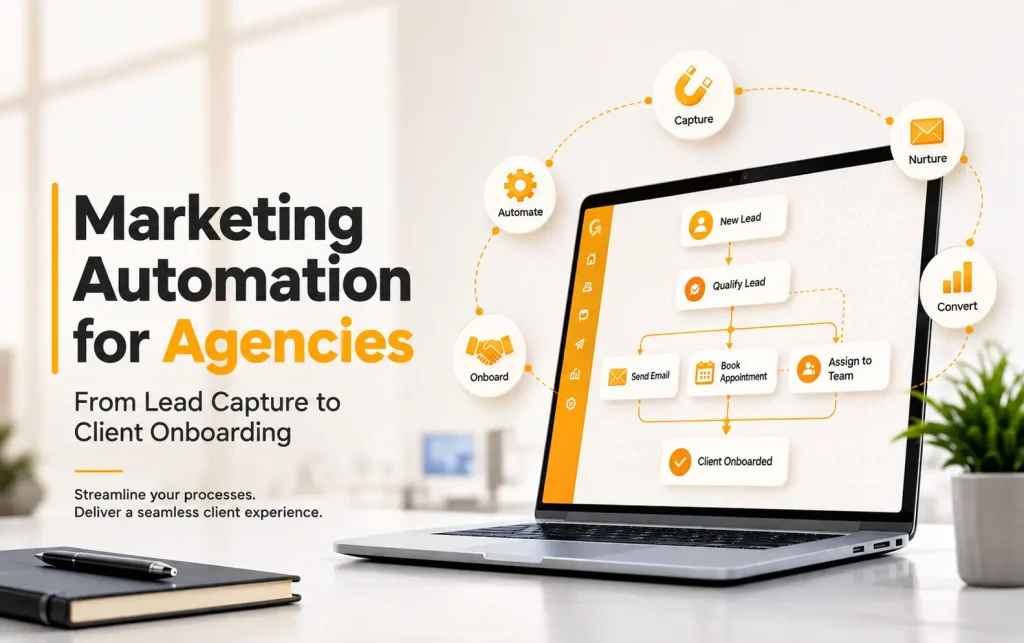
Running a growing agency requires more than generating leads. Your team must respond quickly, qualify prospects, schedule appointments, follow up consistently, close deals, collect client information, assign internal tasks, and keep customers updated.
When these activities are handled manually, important details can be missed. Leads may wait too long for a response, sales representatives may forget follow-ups, and new clients may experience a slow or confusing onboarding process.
Marketing automation helps agencies connect these processes into one organized system. With support from experienced marketing automation experts, an agency can automate repetitive work while maintaining a personalized customer experience.
Here is how marketing automation can support the complete journey from lead capture to client onboarding.
1. Automating Lead Capture
The automation process begins when a potential customer interacts with your agency.
Leads may enter through:
- Website contact forms
- Landing pages
- Social media advertisements
- Live chat
- Lead magnets
- Appointment calendars
- Phone calls
- Referral campaigns
Instead of manually transferring information between platforms, automation can send each lead directly into your CRM. The system can record the lead source, requested service, contact information, campaign details, and submission time.
This creates a centralized database and reduces the risk of leads being lost in spreadsheets, inboxes, or separate advertising platforms.
2. Sending an Immediate Response
Speed matters when a new prospect contacts your agency. A delayed response gives the lead more time to contact a competitor.
An automated workflow can send an immediate email or SMS confirming that the inquiry was received. The message may include a short introduction, information about the next step, and a link to schedule a consultation.
The assigned salesperson can also receive an internal notification so they know a new lead requires attention.
The goal is not to remove human communication. Automation ensures that every prospect receives a prompt initial response while your team prepares to follow up personally.
3. Qualifying Leads Automatically
Not every inquiry will be a good fit for your agency. Some prospects may have the wrong budget, need a service you do not offer, or lack the authority to make a decision.
A lead qualification workflow can collect information such as:
- Business type
- Company size
- Required service
- Current challenges
- Monthly marketing budget
- Project timeline
- Existing software
- Decision-making authority
The system can save these answers in custom fields, apply relevant tags, calculate a lead score, and place the contact into the correct pipeline.
Qualified leads can be routed to the sales team, while low-priority prospects can enter a longer nurturing campaign. Business automation experts can help agencies design qualification rules that reflect their actual sales criteria.
4. Routing Leads to the Right Team Member
Growing agencies often offer several services, such as SEO, paid advertising, website development, CRM setup, content production, or lead generation.
Automation can assign leads based on the service they request. For example, a media buying inquiry can be routed to the advertising team, while a CRM automation request can be assigned to a technical specialist.
Lead routing can also be based on location, industry, budget, availability, or campaign source.
Clear routing improves response times and prevents confusion about who is responsible for each opportunity.
5. Automating Appointment Booking
Once a lead is qualified, the next step is often a discovery call or consultation.
An automated booking process can provide the correct calendar based on the lead’s needs. After an appointment is booked, the system can send a confirmation through email or SMS.
Additional reminders can be scheduled before the meeting. These messages may include:
- Appointment date and time
- Meeting link
- Preparation instructions
- Rescheduling option
- Cancellation link
- Contact information
Automated reminders help reduce no-shows and create a more professional experience for prospects.
6. Building a Lead-Nurturing Sequence
Many prospects are interested but not ready to make a decision immediately. Without a structured follow-up process, these leads often disappear.
A nurturing workflow can deliver useful information over several days or weeks. Content may include educational emails, case studies, testimonials, service comparisons, frequently asked questions, and invitations to book a call.
The sequence should reflect the lead’s interests. A prospect interested in GoHighLevel services should not receive the same content as someone looking for paid media management.
Experienced automation experts can use segmentation and behavioral triggers to make nurturing campaigns more relevant.
7. Automating Sales Pipeline Updates
Your CRM pipeline should show the actual status of every opportunity.
Automation can create or update opportunities when a lead performs a specific action. For example, the system can move a prospect from “New Lead” to “Appointment Booked” after scheduling a call.
Other stages may include:
- Contacted
- Qualified
- Discovery Call Completed
- Proposal Sent
- Follow-Up Required
- Deal Won
- Deal Lost
Automated updates reduce manual data entry and help managers understand how many opportunities are moving through the sales process.
8. Following Up After Sales Calls
Sales calls do not always result in an immediate decision. Prospects may need time to review a proposal, speak with a business partner, or compare providers.
A post-call workflow can send a personalized summary, proposal link, case study, or next-step instructions.
Follow-up reminders can also be created for the salesperson. The automation should stop when the prospect responds, books another meeting, accepts the proposal, or is marked as no longer interested.
This prevents unnecessary messages and keeps the communication relevant.
This keeps your sales data organized and reliable.
This keeps your sales data organized and reliable.
9. Triggering Onboarding After a Deal Closes
Once a deal is marked as won, the client onboarding process should begin without delay.
A marketing automation system can:
- Send a welcome email
- Share an onboarding form
- Request platform access
- Collect brand guidelines
- Request logos and creative assets
- Send payment instructions
- Create an internal project
- Assign team members
- Schedule a kickoff call
- Notify the account manager
Different services may require separate onboarding workflows. An SEO client may need to provide website and analytics access, while a media buying client may need to share advertising accounts and creative assets.
Custom onboarding paths help agencies collect the right information from the beginning.
10. Creating Internal Tasks and Notifications
Client-facing communication is only one part of automation. Agencies can also automate internal operations.
When a client submits an onboarding form, the system can create tasks for the delivery team. It may notify a project manager, assign a technical audit, request a campaign strategy, or set a deadline for the first deliverable.
Automated tasks improve accountability and help employees understand what needs to happen next.
However, every task should have a clear owner and deadline. Creating too many unnecessary notifications can make the system difficult to manage.
11. Keeping Clients Informed
Clients want to know that work is progressing. A lack of communication can create concern even when the agency is delivering results.
Automation can send updates at important milestones, such as:
- Onboarding completed
- Campaign launched
- Website access received
- First report available
- Review meeting scheduled
- Additional information required
These updates should support—not replace—the account manager. Important conversations, strategic recommendations, and sensitive concerns should still be handled personally.
12. Measuring and Improving the System
Marketing automation is not a one-time setup. Agencies should regularly review workflow performance.
Important metrics may include:
- Lead response time
- Appointment booking rate
- No-show rate
- Lead-to-client conversion rate
- Email open and reply rates
- Average sales cycle
- Onboarding completion time
- Client retention rate
These measurements help identify where leads are dropping out or where internal delays are occurring.
Why Agencies Hire Marketing Automation Experts
Building individual workflows is relatively easy. Creating a complete system that connects marketing, sales, onboarding, and delivery requires more planning.
Marketing automation experts map the customer journey, define triggers, organize CRM data, create workflow logic, test different scenarios, and document the final system.
Similarly, business automation experts examine the wider operation to identify repetitive tasks that can be streamlined. Skilled automation experts also ensure that workflows do not send duplicate messages, overwrite important data, or continue after a lead has completed the intended action.
Build a Scalable Agency Automation System
The purpose of automation is not to make customer interactions feel robotic. It is to create consistency, reduce repetitive work, and give your team more time for strategy, communication, and service delivery.
GrowthGuild helps agencies automate lead capture, qualification, appointment booking, sales follow-up, pipeline management, and client onboarding.
Whether you need to improve an existing CRM or build a complete system from the ground up, our team can help turn disconnected processes into a structured automation framework.
Ready to streamline your agency operations? Contact GrowthGuild to speak with our marketing automation experts.